armor.wikisort.org - Tank
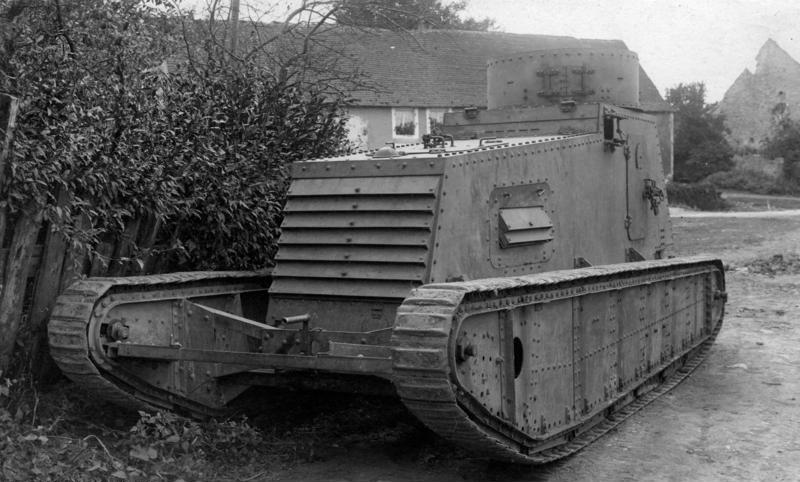
The Leichter Kampfwagen (English: light combat car) or "LK I" was a German light tank prototype of the First World War. Designed to be a cheap light tank as opposed to the expensive heavies coming into service at the time, the tank only reached the prototype stage before the end of the war.
| Leichter Kampfwagen LKI | |
|---|---|
 | |
| Type | Light tank |
| Place of origin | German Empire |
| Service history | |
| Used by | German Empire |
| Specifications | |
| Mass | 6.9 t |
| Length | 5.1 m |
| Width | 1.9 m |
| Height | 2.5 m |
| Crew | 3 |
| Armor | 8–14 mm |
Main armament | 1 × 7.92 mm MG 08 machine gun |
| Engine | Daimler-Benz 4-cylinder 60 hp (44.7 kW) |
| Suspension | unsprung |
Operational range | 70 km |
| Maximum speed | 14–18 km/h |
History
The LK I was designed by Joseph Vollmer. It was based on a Daimler car chassis, using the existing axles to mount sprocket and idler wheels. Its design followed automobile practice, with a front-mounted engine and a driving compartment behind it. It was the first German armored fighting vehicle to be equipped with a turret, armed with a 7.92 mm MG08 machine gun.
Only two prototypes were produced in mid 1918, but no vehicles were ordered.[1] Designed as an experimental cavalry tank, it to paved the way to the LK II.[2]
Notes
- Õun, Mati (1998). Wermachti tankid. Väike tankiõpik vana sõjatehnika huvilisele. Tallinn: Tammiskilp. p. 5.
- Chant, Christopher (2002). World Encyclopedia of the Tank. Second edition. England: Sutton Publishing. p. 46. ISBN 0-7509-3147-7.
External links
Tanks of the First World War | |
|---|---|
| Light | |
| Medium | |
| Heavy | |
| Prototypes, experimentals |
|
Background: History of the tank, Tank classification, Tanks in World War I | |


На других языках
[de] LK I
LK I (Leichter Kampfwagen I) war ein leichter Deutscher Panzer aus dem Ersten Weltkrieg.- [en] LK I
[ru] LK I
Lk l (полное название Leichter Kampfwagen, Ляйхтер Кампфваген, в переводе с нем. — «лёгкая боевая машина») немецкий танк времён Первой мировой войны, разработанный Йозефом Фолльмером.Другой контент может иметь иную лицензию. Перед использованием материалов сайта WikiSort.org внимательно изучите правила лицензирования конкретных элементов наполнения сайта.
WikiSort.org - проект по пересортировке и дополнению контента Википедии